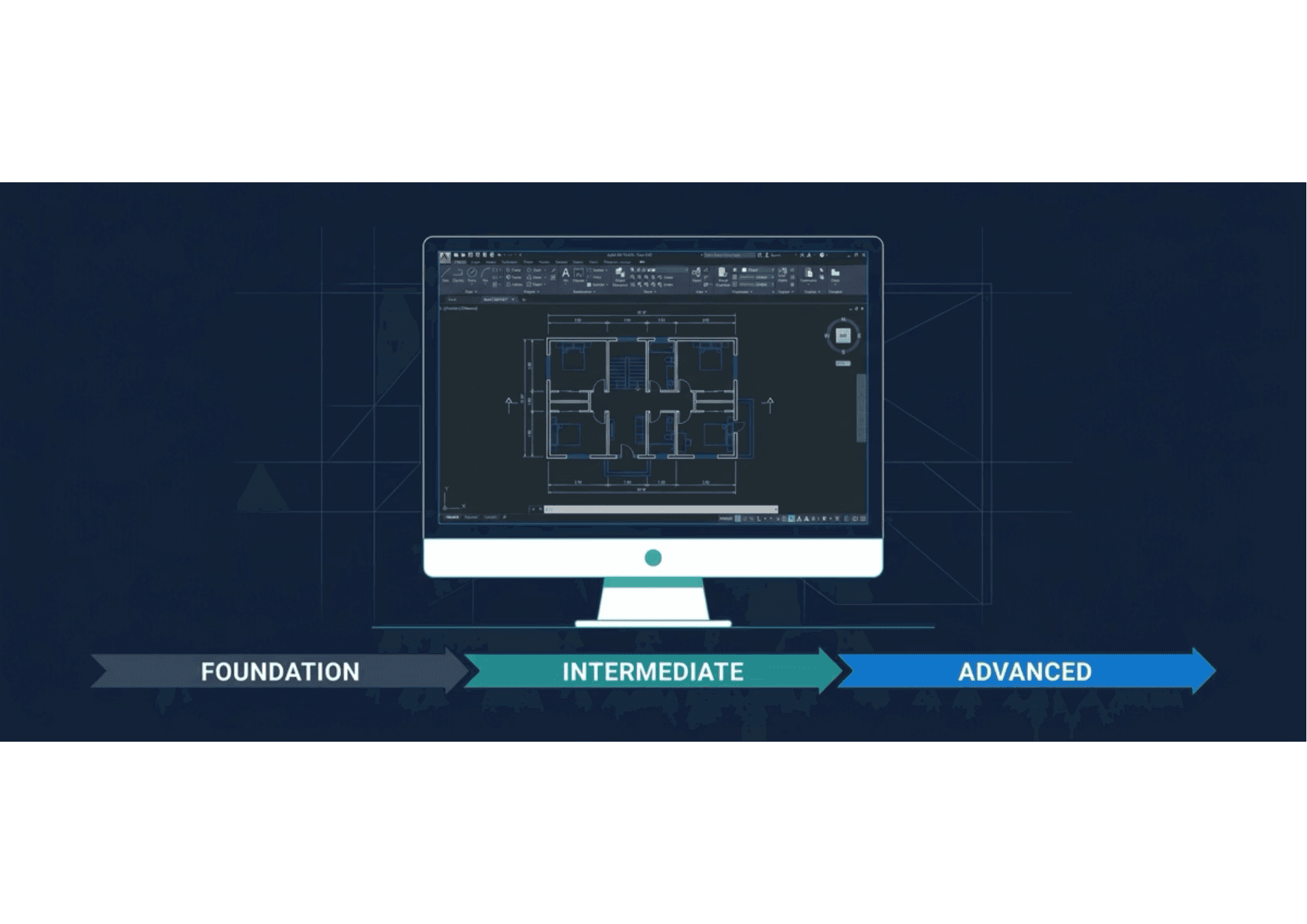

Course pages describe outcomes and rarely describe weeks, which is unhelpful when the thing that decides whether you finish is what a Tuesday evening actually looks like. This sets out what a live cohort revit certification program contains week by week, how much time it genuinely takes, and what to arrange before you start rather than discover in week three. The AECIX academy catalogue lists the tracks the schedule below is drawn from.
Key Takeaways
The weekly commitment is the session plus roughly the same again in exercise time, and underestimating the second half is the usual cause of falling behind. Fixed intake dates and a fixed weekly slot are the mechanism that makes completion likely, not an administrative inconvenience. Arrange the software, the time and the expectations before week one, because the opening session should teach you something rather than resolve your setup.
What a Typical Week Contains
A live session is the anchor, scheduled at a fixed time each week and run by an instructor rather than played back. New material is introduced, a workflow is demonstrated and the previous exercise is discussed, including the mistakes that came up across the cohort. An exercise follows and is due before the next session. This is where the learning actually happens, and it typically takes about as long again as the session itself. Learners who treat the session as the commitment and the exercise as optional are the ones who fall behind. Review closes the loop. Submitted work is opened and inspected for how it was built rather than how it looks, and specific feedback comes back before the following session so that the correction lands before the next exercise is built on the same assumption. Around that sits informal cohort contact, which is not scheduled and turns out to matter. Peers at the same stage comparing approaches to the same exercise is where a surprising amount of the learning happens, particularly for anyone studying without an AEC community around them. What is deliberately absent is a large volume of recorded material to work through independently. That is a design choice rather than an omission. Time spent watching is time not spent building, and in vocational education generally the practice half is what produces capability rather than the exposition half.
How Much Time It Genuinely Takes
Plan on the session plus roughly the same again, weekly, for the duration of the course. AECIX runs its Revit tracks at professional level in its academy catalogue, with foundation courses at four to five weeks and specialist tracks such as Navisworks at around six. The honest failure mode is arithmetic. Learners commit to the session time, which is visible, and not to the exercise time, which is not, then find themselves two exercises behind by week three with no realistic route back. That is the single most common way a cohort is abandoned. Weeks are not uniform either. The opening weeks tend to be lighter and the middle heavier, particularly once a sustained exercise begins. Building slack into the middle of the course rather than the start is the adjustment most working learners eventually make. Six hours a week and fifteen hours a week are genuinely different situations, and being honest about which one you are in changes which level and which pace you should be placed at. That honesty is worth more than optimism at the point of enrolment. A useful planning check is to look at the last three months rather than the next three. How many weeks were genuinely unaffected by work travel, deadlines or family obligations. That number rather than an average is what your schedule has to survive, and planning against the good weeks is how people end up two exercises behind by the middle of a course.
Why Fixed Dates Are the Feature
Intakes run to a schedule rather than starting on demand, which looks like an inconvenience and is the mechanism the whole format depends on. The session happens on its day whether or not you prepared, and the exercise is due whether or not the week was difficult. Self paced study fails for structural rather than motivational reasons. Without an external deadline, study competes weekly against work and family and loses most of those contests, which is why abandonment rates for unstructured content are as high as they are. The fixed weekly slot matters as much as the fixed start. A recurring commitment at a known time can be defended against other obligations in a way that an intention to study at some point this week cannot, and that defensibility is most of what you are buying. AECIX schedules its live sessions around work and study commitments rather than during standard office hours, which is the specific constraint that defeats most working professionals attempting to upskill elsewhere. There is a social component to the fixed slot as well. Missing a session that other people attended is noticeable in a way that skipping a video is not, and that mild accountability does a surprising amount of work over a twelve week course. It is not pressure so much as presence.
What to Arrange Before Week One
Have the software installed and working, and have completed any pre reading issued. The opening session should teach you something rather than resolve setup problems, and setup problems in week one tend to compound into being behind by week two. Block the session time and the exercise time in whatever calendar your household actually respects. The exercise block is the one people omit, and it is the one that determines whether you keep up. Treat it as an appointment rather than as spare capacity. Tell whoever needs to know. Partners, managers and anybody who might reasonably expect your evenings. A course that has been announced is considerably easier to protect than one being fitted in quietly, and the social commitment is a genuine mechanism rather than a nicety. Finally, be placed correctly rather than optimistically. Describe what you can currently produce unsupervised rather than what software you have opened, since only the first lets anybody place you accurately. An academic counsellor will do that assessment before you enrol rather than after.
What the Middle of the Course Feels Like
Expect the first fortnight to feel slower than you want. Foundation material is unglamorous by nature and the temptation to conclude you already knew this is strongest precisely where the concepts everything else depends on are being established. Expect a plateau somewhere in the middle of any longer sequence, when the novelty has gone and the new competence is not yet good enough to be useful. That period is normal rather than a signal you chose wrongly, and it is the specific point at which a cohort retains people who would otherwise quietly stop. Expect the exercises to get harder faster than the demonstrations do, which is deliberate. Being able to follow a workflow and being able to produce one are different things, and the gap between them is where the actual capability is built. And expect to finish with an artefact rather than only a certificate. A complete model with sheets extracted, or a coordinated set you can open and explain decision by decision, is what an interviewer will actually assess, and it is the reason the exercise half of the week mattered so much. One last thing to expect, which nobody puts on a course page. You will produce at least one piece of work you are quietly pleased with and at least one that comes back heavily corrected. Both are part of the process working properly, and the second is where most of the actual improvement happens.
Conclusion
A cohort week is a live session, an exercise of roughly equal length, and review that arrives before the next session. The fixed date is the mechanism rather than the inconvenience, the exercise time is what people underestimate, and the middle of any course is harder than either end. Plan for the real numbers and a live cohort revit certification program is considerably easier to finish than an unstructured alternative that asks nothing of your calendar, whichever track in the AECIX catalogue you pick.
FAQ
Q1: How much time does a live cohort course take each week?
The session plus roughly the same again in exercise time. Learners commit to the visible session hours and underestimate the exercise hours, which is the single most common reason people fall behind by about week three.
Q2: Why do cohorts start on fixed dates?
Because the fixed start and shared schedule are what make completion likely. Rolling enrolment removes the external deadline, and that deadline is the largest structural advantage a cohort holds over studying the same material alone.
Q3: What happens in a typical session?
New material is introduced, a workflow is demonstrated live, and the previous exercise is discussed including mistakes that came up across the cohort. An exercise is then set and is due before the following weekly session runs.
Q4: When does feedback on my work arrive?
It should reach you before the next session, so the correction lands before you build the following exercise on the same flawed assumption. Ask any provider about turnaround, since a slow loop is considerably less useful.
Q5: Can I keep up while working full time?
Yes, if sessions are scheduled for it and you block the exercise time as well. AECIX runs live sessions around work and study commitments rather than during standard office hours, which is the constraint that defeats most people elsewhere.
Q6: What should I do before the first session?
Install and test the software, complete any pre reading, block both the session and exercise time in your calendar, and tell anybody who might reasonably expect your evenings. Week one should teach you something rather than fix setup.
Q7: Is the middle of the course really harder?
Usually, yes. Novelty has gone and the new competence is not yet useful enough to show anybody. That plateau is normal rather than evidence of a wrong choice, and it is where cohorts retain people who would otherwise stop.
Q8: What do I have at the end?
An artefact as well as a certificate: a complete model with sheets extracted, or a coordinated set you can open and explain decision by decision. The AECIX blog hub covers what each track produces in more detail.